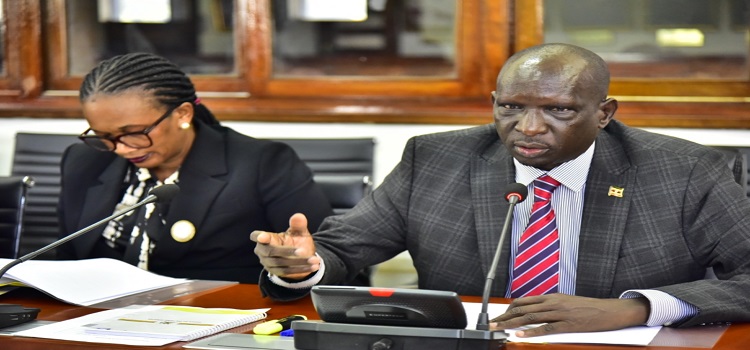

Speaker of Parliament Jacob Marksons Oboth has brokered a solution to a stand-off between the Bank of Uganda (BOU) and Uganda Co-operative Savings and Credit Union Limited (UCSCU) over SACCO licensing requirements.
Oboth directed the Ministry of Finance to begin drafting an amendment to the law governing SACCOs, while allowing institutions more time to comply with BOU licensing requirements.
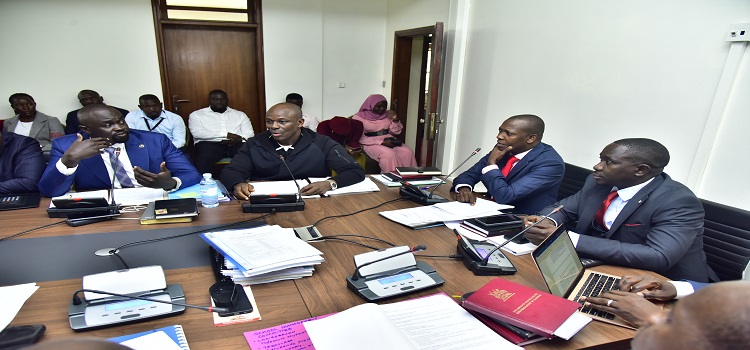
The agreement was reached during a meeting in Parliament on Wednesday, 23 September 2026, attended by BOU Governor Michael Atingi-Ego, cooperative leaders and officials from the Ministries of Finance and Trade.
The meeting followed a UCSCU petition over a BOU directive requiring large SACCOs to apply for licences by 30 September 2026.
BOU had warned that SACCOs that failed to obtain licences by 1 October 2026 would be cut off from the commercial banking system, including access to bank deposits and mobile money transactions.
Atingi-Ego said BOU was enforcing the law under the Microfinance Deposit-Taking Institutions Act and the 2023 regulations.
“This matter got to President Yoweri Museveni and a few things were agreed upon. But the law is clear. If we do not adhere to the deadline, the country will be moved into the grey zone and this is not good for the economy,” Atingi-Ego said.
He said eight SACCOs were fully licensed, 21 were at the final stage and about 50 had picked application forms.
Atingi-Ego also warned that Uganda faces a Financial Action Task Force (FATF) mutual evaluation beginning in 2027.
“We run a risk of this country going back to the grey list. We cannot have big financial institutions hanging in the air,” he said.
However, UCSCU Chief Executive Officer Sylvester Ndiroramukama said SACCOs were not opposed to regulation but wanted a harmonised system.
“It is not true that SACCOs do not want to be regulated. We actually want to be regulated, but we want regulation which is harmonised,” Ndiroramukama said.
He said SACCOs are regulated under different laws and by different government institutions, creating confusion.
Ndiroramukama added that many SACCOs could not meet the deadline because decisions to seek BOU licensing require approval at Annual General Meetings, most of which are held around March.
Oboth said the conflicting legal requirements needed to be addressed through legislation.
“When two laws conflict or contradict each other, you need a Speaker to speak to both sides so they can see the difference, and everyone is left happy,” he said.
The Speaker directed large SACCOs to pick licensing application forms within seven days and said those making genuine efforts to apply by 31 March 2027 should be considered under phased compliance, with 30 June 2027 proposed as an outer limit.
He also directed the Minister of Finance to initiate an amendment Bill to harmonise the legal framework and establish a SACCO-specific regulatory regime.
Atingi-Ego cautioned that any extension must be matched by concrete action from SACCOs, maintaining that BOU's regulatory position remains in force.
Oboth also directed that a taskforce previously established to develop counter-proposals to BOU's position be reinstated to follow up the agreed roadmap.